
There are many compelling reasons to study in Malaysia, from affordable tuition fees and internationally recognized degrees to modern universities and global educational opportunities.
However, understanding the potential challenges is equally important. This guide explores the key advantages and disadvantages of studying in Malaysia to help you make an informed decision.
Malaysia has become one of the most attractive study-abroad destinations, welcoming thousands of international students every year.
Here are the 10 main reasons to study in Malaysia and what makes the country an appealing choice for higher education.
Malaysian universities are known for their academic quality, strong international rankings, and established global reputations.
For example, Universiti Malaya (UM) consistently ranks among the world's top 100 universities, making it one of the best universities in Malaysia according to the QS World University Rankings.
Academic programs in Malaysia are also subject to quality assurance standards established by the Malaysian Qualifications Agency (MQA).
This regulatory framework supports the international recognition of Malaysian qualifications and can strengthen graduates' opportunities in European, Middle Eastern, and other international employment markets.
One of the practical advantages of studying in Malaysia is the relatively short duration of many undergraduate programs.
Malaysian universities offer intensive academic structures that allow students to complete a Bachelor's Degree in just 3 years in many Business Administration and Engineering programs.
Compared with education systems where similar degrees take 4 years, this can save students an entire year of tuition fees and living expenses.
Unlike many non-English-speaking study destinations, Malaysian public and private universities widely use English in academic programs, examinations, and university communication.
Studying in an English-speaking academic environment allows students to develop stronger communication skills while gaining knowledge in their chosen specialization.
This can also help graduates prepare for international employment opportunities where English proficiency is an important professional advantage.
Not having an IELTS or TOEFL certificate does not necessarily prevent you from applying to Malaysian universities.
Many institutions offer Intensive English Programs (IEP) for admitted international students who have not yet achieved the required language proficiency level.
These programs are generally available through university language institutes and help students progress from foundational English skills to the level required for academic study.
Students can then complete the university's English assessment and begin their chosen degree program once they meet the required standard.
Malaysia is known for relatively flexible university admission procedures, particularly at private institutions.
Many universities accept international students based on their previous academic qualifications without requiring complicated entrance examinations commonly used in other countries.
The exact admission requirements depend on the university and academic specialization.
For further information about minimum grades, required documents, and the differences between public and private institutions.
One of the strongest reasons to study in Malaysia is the variety of universities available to international students.
Students can choose between established public research universities, leading private institutions, and official international branch campuses.
These options include:
International branch campuses follow the academic frameworks of their parent universities and award degrees associated with those institutions while allowing students to complete their studies in Malaysia.
University twinning programs are among the main reasons international students choose Malaysia.
Several leading private universities offer academic pathways such as 3+0 and 2+1 programs in cooperation with British or Australian universities.
These pathways allow students to follow international university curricula while studying partly or entirely in Malaysia.
Depending on the program, students may graduate with a degree awarded by the foreign partner university at approximately one-third of the cost of traveling to and studying in Europe.
This creates an opportunity to obtain an internationally recognized qualification while reducing the overall cost of higher education.
Malaysian universities invest heavily in modern educational infrastructure and practical training facilities.
For example, institutions such as Asia Pacific University (APU) provide advanced laboratories for Cybersecurity and Artificial Intelligence, designed to simulate real professional working environments.
Universities offering Medicine also provide modern teaching hospitals and clinical simulation facilities.
These resources help students gain practical experience and develop the professional competencies required by contemporary international industries.
Despite the quality of its educational institutions and their international recognition, Malaysia remains relatively affordable compared with many Western study destinations.
For example, annual tuition fees for Engineering programs in Malaysia or Technology programs at reputable private universities generally range from $4,000 to $7,000 USD.
These costs are considerably lower than those associated with studying similar programs in many Western countries.
This affordability makes Malaysia particularly attractive to students who want access to quality education without exceeding their financial budgets.
Malaysia welcomes tens of thousands of international students from more than 150 countries.
This diversity creates a multicultural university environment where students can interact with people from different backgrounds, exchange experiences, and build international friendships.
The country's welcoming atmosphere and international student communities can also make the transition to studying abroad easier, especially for students experiencing life outside their home countries for the first time.
For more information about available academic programs, explore our guide to medical specializations in Malaysia.
Although there are many compelling reasons to study in Malaysia, international students should also understand the potential disadvantages.
The following challenges can affect your educational experience, but careful planning can help you prepare for them.
Malaysian employment policies generally prioritize local citizens for employment and certain professional training opportunities.
As a result, international students may find it more difficult to secure internships independently.
How to overcome this challenge:
Choose a Malaysian university that maintains strong partnerships with industry and provides practical training opportunities through established companies.
You can also begin searching early for internships at multinational companies located in Kuala Lumpur and other major business centers.
One of the major challenges for international graduates in Malaysia is transitioning from a student visa to a work visa.
Malaysian employment regulations may require companies to offer foreign employees salaries exceeding MYR 5,000 per month, depending on the applicable employment category and requirements.
These conditions can make it more difficult for international graduates to secure long-term employment and remain in Malaysia after completing their studies.
Graduates may therefore need strong qualifications, specialized professional skills, and competitive employment offers to pursue local career opportunities successfully.
Not all Malaysian universities offer the same level of academic quality.
While several institutions are internationally ranked and maintain strong academic reputations, some smaller private colleges may provide less competitive educational programs.
How to overcome this challenge:
Before applying, verify that your chosen academic program holds appropriate accreditation from the Malaysian Qualifications Agency (MQA).
You should also examine the university's international rankings and determine whether its qualification is recognized in the country where you plan to work.
Some students are surprised to discover that university admission and enrollment procedures involve additional expenses beyond tuition fees.
These may include mandatory payments to Education Malaysia Global Services (EMGS) for student visa processing.
EMGS-related expenses can range from approximately $300 to $800 USD, depending on the required services.
These fees are generally paid before traveling and are often non-refundable.
How to overcome this challenge:
Request a complete breakdown of university admission fees, visa expenses, and administrative charges before making any payments.
This helps you calculate the actual cost of your first semester and avoid unexpected financial commitments.
Although English is widely used in Malaysian universities, everyday communication often includes a combination of English and local languages.
This informal variety of English is commonly known as Manglish.
It may include simplified grammar, shortened expressions, and local conversational particles such as lah.
International students may initially find this speaking style difficult to understand, particularly when interacting with local communities during their first few months.
However, most students gradually become familiar with the accent and local expressions as they gain everyday experience.
Malaysian immigration authorities apply strict conditions to international student visas.
Annual Student Pass renewal is closely linked to maintaining an academic attendance rate of at least 80%, along with meeting the required minimum academic performance standards.
Failing to satisfy these conditions may affect a student's eligibility to renew their Malaysia student visa.
How to overcome this challenge:
Attend lectures regularly, maintain satisfactory academic performance, and follow the university's attendance and immigration requirements throughout your studies.
Changing your academic program or transferring to another Malaysian university after arriving in the country may involve more complicated procedures than expected.
A Malaysian student visa is issued in connection with the institution that admitted the student.
Therefore, transferring to another university may require canceling the existing Student Pass and applying for new visa approval through EMGS under the name of the new institution.
Depending on the applicable immigration procedures, students may also need to leave Malaysia and apply again from their home country.
How to overcome this challenge:
Choose your university and specialization carefully before applying, and confirm the transfer and immigration procedures with the relevant authorities before making any changes.
Beyond the academic reasons to study in Malaysia, the country also offers several lifestyle advantages that contribute to a comfortable international student experience.
These include:
Every international study destination has its advantages and disadvantages, and Malaysia is no exception.
Students should consider the following lifestyle challenges before moving.
Malaysia has a tropical climate characterized by high humidity and frequent rainfall throughout the year.
Students who are accustomed to four distinct seasons may need time to adjust to the consistently warm and humid conditions.
Because of Malaysia's climate, air conditioning is often essential for maintaining a comfortable indoor environment.
Frequent air conditioner use can increase monthly electricity bills.
Some budget accommodation options may also rely on older air conditioning units instead of modern centralized cooling systems, potentially increasing electricity consumption.
Although Malaysia is known for peaceful multicultural coexistence, international students may sometimes find it difficult to build deeper social connections because of cultural differences and language barriers.
These challenges may be more noticeable in areas outside major urban centers, where communication styles and local languages can vary between communities.
To help you make an informed decision, the following table compares 3 popular international study destinations: Malaysia, Turkey, and Germany.
Each destination offers different advantages depending on your academic goals, financial circumstances, and preferred living environment.
For a more detailed comparison, explore our guide to studying in Turkey vs. Malaysia.
Discussions among international students on Facebook, Telegram, and Quora highlight several recurring experiences related to studying and living in Malaysia.
These experiences can be summarized into 3 main themes.
Many newly arrived international students report being surprised by the additional expenses they encounter before and immediately after traveling.
One student described the experience:
"The education is excellent, but nobody tells you in advance about EMGS fees, medical examinations, and accommodation deposits equivalent to two months' rent. Students should prepare a larger budget for their first month to cover these combined expenses."
This experience highlights the importance of preparing a realistic financial plan that includes more than tuition fees and monthly living expenses.
Other students, particularly those studying Technology and Business Administration, highlight the advantages of Malaysian twinning programs.
One student shared:
"The best decision I made was enrolling in a 3+0 program. I earned a degree from a prestigious British university at one-third of what my friend paid in London, and I secured an international job because of the reputation of the British university awarding my degree."
Such experiences demonstrate why international degree pathways are an important attraction for students seeking globally recognized qualifications at lower costs.
Many international students appreciate Malaysia's lifestyle and multicultural environment while acknowledging the initial challenges of adjusting to its weather and local communication styles.
One student summarized the experience:
"The country is very safe and comfortable, and the variety of food is amazing. My biggest challenges were adapting to the intense humidity outside my accommodation and understanding Manglish in local markets during the first few months. Once I got used to these things, daily life became enjoyable and easy."
These experiences suggest that adapting to life in Malaysia may require an initial adjustment period, but many students find the overall experience rewarding.
After considering the academic reasons to study in Malaysia, the potential disadvantages, and the advantages of living in the country, it is important to approach your decision carefully.
The following recommendations can help you make the most of your study-abroad experience:
Malaysia offers a compelling combination of internationally oriented education, affordable tuition fees, modern university facilities, and a multicultural lifestyle.
However, the decision to study abroad should also consider potential challenges involving employment opportunities, visa regulations, accommodation expenses, and adapting to a new culture.
Understanding both the advantages and disadvantages will help you decide whether Malaysia is the right destination for your academic and professional future.
If you have additional questions about studying in Malaysia or need help comparing universities, the New Horizons educational consultancy team can provide guidance based on your qualifications, goals, and budget.
New Horizons is an established educational consultancy specializing in international university admissions.
With more than 10 years of experience, New Horizons provides comprehensive services designed to help international students choose suitable universities and complete their study-abroad procedures.
Our services include:
With New Horizons, you can receive professional guidance throughout the university admission process, from choosing your academic specialization to preparing for your arrival in Malaysia.
I'm a passionate Web Content Writer with over 5 years of experience in creating SEO-friendly content in both Arabic and English. I specialize in writing clear, engaging, and reader-focused content that not only ranks on search engines but also speaks directly to the audiences across various industries, including healthcare, education, religion, tourism, and professional services .
After many years of working on registering thousands of students in Turkish universities, and answering an unlimited number of questions about studying in Turkey, these are the most important questions that concern students
Theoretically, international students are permitted to work up to 20 hours per week—but only during official holidays, not during the academic term. However, finding employment is difficult for foreign students, and the wages are modest; they are insufficient to cover university tuition fees and may barely help with certain personal expenses.
Education Malaysia Global Services is the sole official government entity responsible for processing and issuing visas for international students. The fees payable to the organization are mandatory and cover visa processing, initial health insurance, and medical screening—a necessary step for entering the country as a student.
Yes, private universities in Malaysia are characterized by their flexibility; they accept average high school grades (often starting from 60% or 65%, depending on the major), thereby offering students the opportunity to pursue a high-quality university education.
Certainly, while public and medical universities require high grades, private universities open their doors to students with average grades in fields such as management, information technology, and engineering, providing them with an academic environment to improve their academic standing.
No, twinning programs (leading to a foreign degree) are not available everywhere. They are generally limited to major, prominent private universities that hold formal academic agreements with universities in the UK, Australia, or the US. You should check the specific university's website to confirm the program's availability for your particular major.
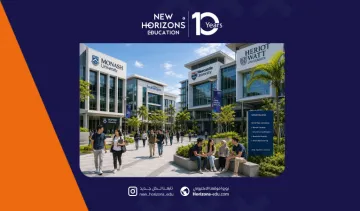
Malaysia currently hosts 11 foreign university branches, offering international students the opportu...

Malaysia has 20 public universities recognized by its higher education authorities, and remarkably,...
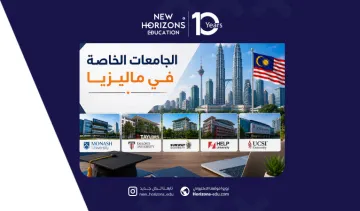
According to the latest statistics from Malaysia's Ministry of Higher Education, the country attract...

The Cost of Living in Malaysia is one of the main concerns for international students and families p...